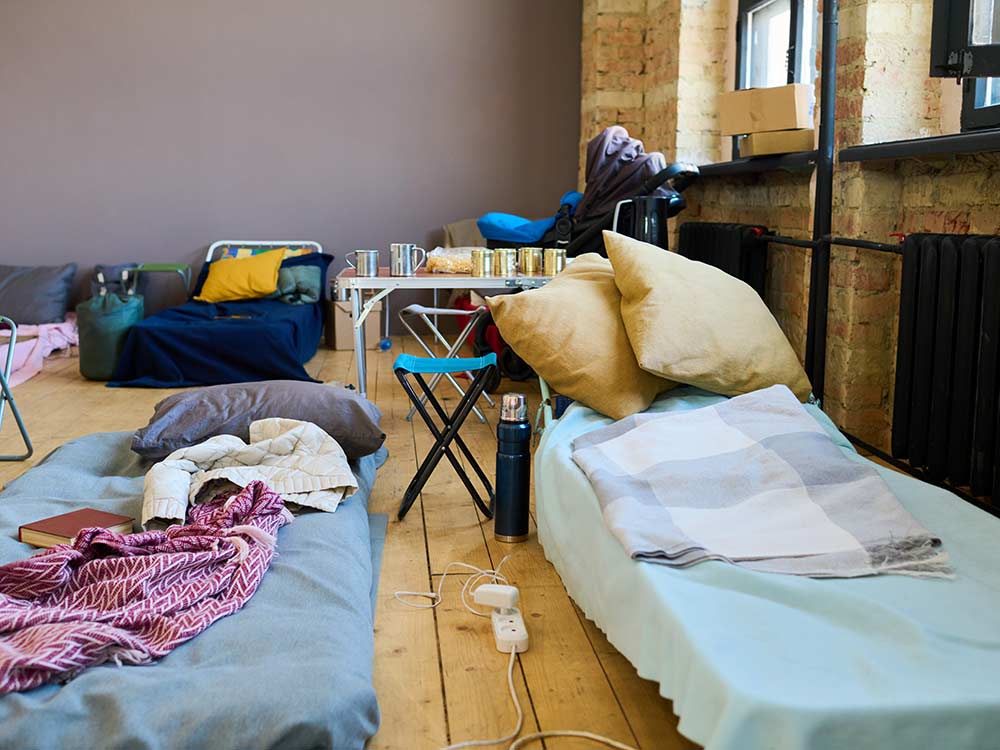

UCAN recently performed required Point-In-Time counts of homeless individuals in both Douglas and Josephine County. We do our best to capture an accurate number of homeless folks by offering convenient central locations for counts, and sending out teams that cover the entirety of each county. We and our partners provide meals and a wide range of services as incentive for those who are homeless to attend the counts.

It will take a while to tabulate count data. What we do know is that despite efforts to outreach countywide, offer convenient locations, and provide incentives to attend the events, the Point-In-Time counts significantly underestimate actual numbers of local homeless folks. With many homeless individuals lacking transportation, and some living far off the grid, we know that there are many such residents who don’t attend the count.
Regardless of the eventual official count, our homeless services staff are seeing many more homeless individuals locally this year. And they are noticing a change in the make-up of homeless residents. More and more of our local homeless are seniors, are people with physical disabilities or are both. Why this change?
Simply put, people on fixed incomes, particularly those who did not earn a lot when they worked, are being further priced out of the rental market. In 2023, the median rent in Josephine and Douglas County were $1,157 and $995 respectively. That same year, the average Social Security benefit in Oregon was $1,872. In either County, the typical resident on social security is paying ½ of their income for housing alone.
UCAN is doing as much as possible to prevent residents from ending up on the streets. This past year, we rehoused around 100 Josephine County households and 30 Douglas County ones. We also kept a total of 240 households in both counties who were at-risk of eviction from losing their homes. For those who do end up homeless, we provided shelter to 115 people, including 19 children, at the Gary Leif Navigation Center in Roseburg. We have also operated a warming center in Roseburg for around 20 days this winter, far more than we did so last year.
Holly Fifield, UCAN’s Housing and Homeless Services Director, says: “I couldn’t be prouder of the hard work my team has done addressing this need this year. They have gone above and beyond in getting and keeping people housed. And I want to give a special shout out to those who have worked countless overtime hours throughout the nights at our warming center. Through their support, and that of a small number of dedicated volunteers, we’ve kept many individuals from suffering frostbite, hypothermia, and other weather-related conditions.”
She continues, “we all need to come together to help people stay housed. Not just non-profits and government agencies, but those fortunate to have stable housing. Together we can ensure that those lacking resources, whatever the reason, have a place they can call home.”


 This year we have offered a pilot Diaper Distribution program, generously supported by the Community Action Partnership of Oregon and PDX. The program helps the many families of babies and infants who struggle to pay for diapers and wipes. This year, we served about 750 Douglas County families, more families than were served in any other county, keeping our youngest healthier and happier. The pilot program wraps up in February, and we hope that it will be extended.


 After eight years in this position, the work continues to be very meaningful to her. For one, Ashley gets to work with families who live in communities similar to where she grew up and continues to live. While their circumstances may be very different from Ashley’s, they’re folks whose challenges she understands from having grown up here.